16 Days of Activism
16 Days of Activism - stop domestic abuse
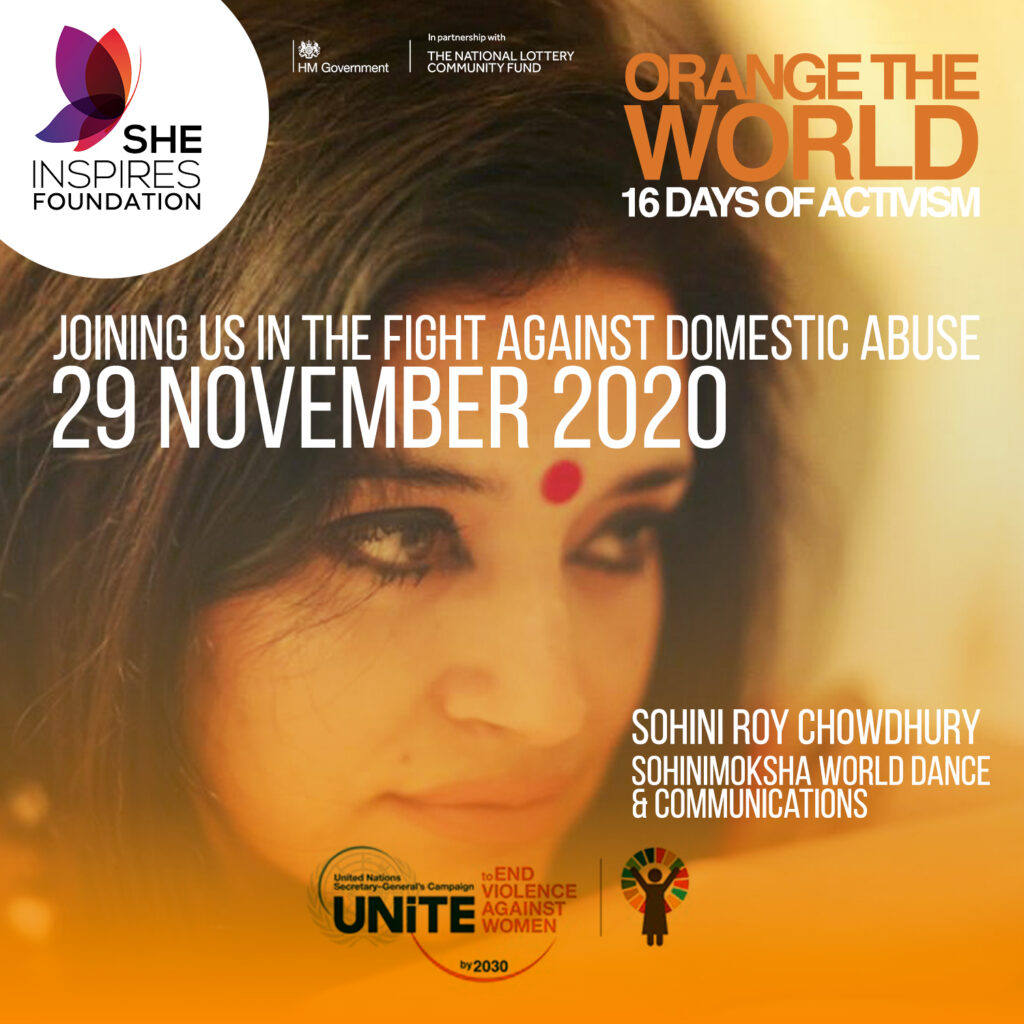
Joining us in the fight - Sohini Roy Chowdhury
Joining us in the fight against Domestic Abuse during 16 Days of Activism was Sohini Roy Chowdhury, Bharatanatyam Dancer, Choreographer, Producer, Professor of Natyashastra, and Founder of Sohinimoksha World Dance & Communications.
A premier ambassador of Indian culture for the last several years, Sohini ́s performances –
solo and with her multinational troupe Sohinimoksha, have been garnering tumultuous audience appreciation, and rave critical reviews all over the world.
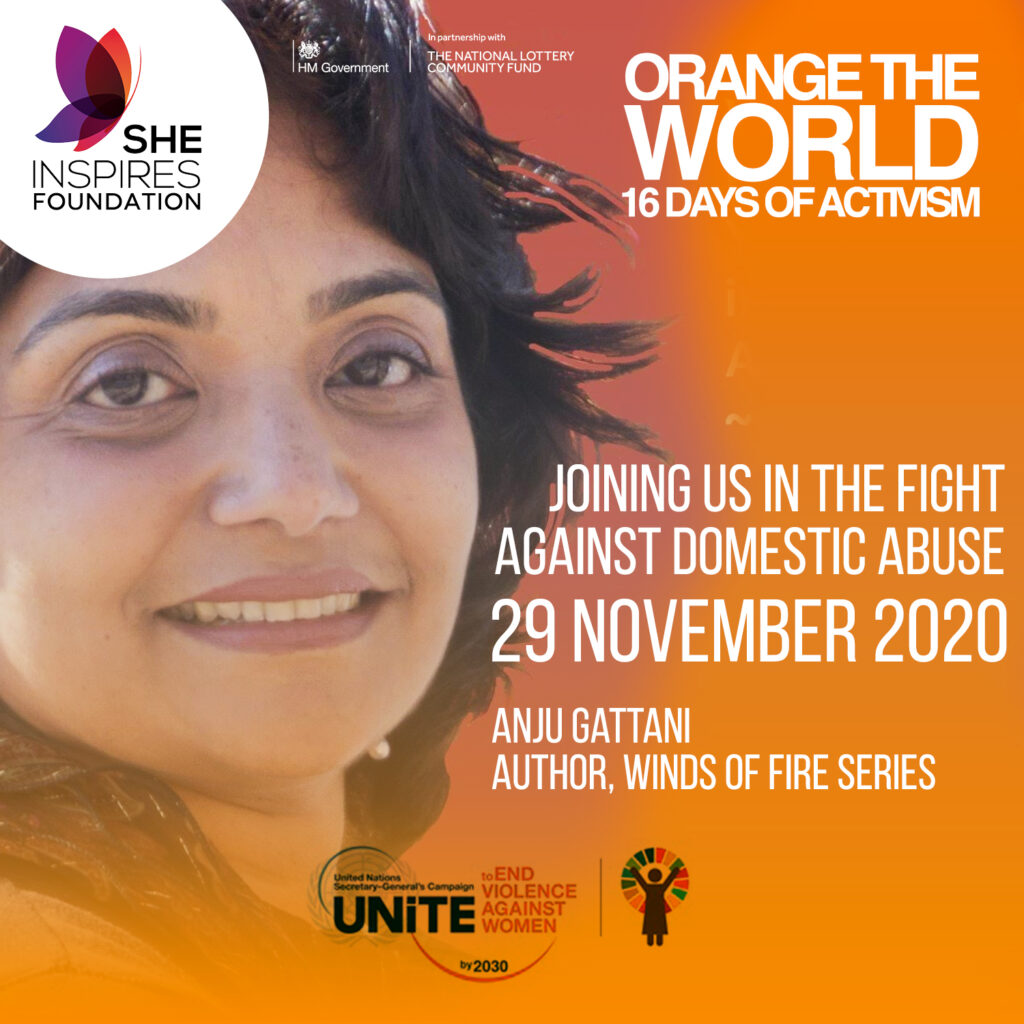
Joining us in the fight - Anju Gattani
Joining us in the fight against Domestic Abuse during 16 Days of Activism was Anju Gattani - Author, Winds of Fire Series.
A freelance journalist, public speaker and author, Anju has been published in writings in publications across Hong Kong, India, Singapore, and the U.S. She was born in India and has also lived in Singapore, Australia, New Jersey, Connecticut, and finally dug her roots in Atlanta, Georgia with her husband, 2 dashing boys and a rebel lion-head rabbit.
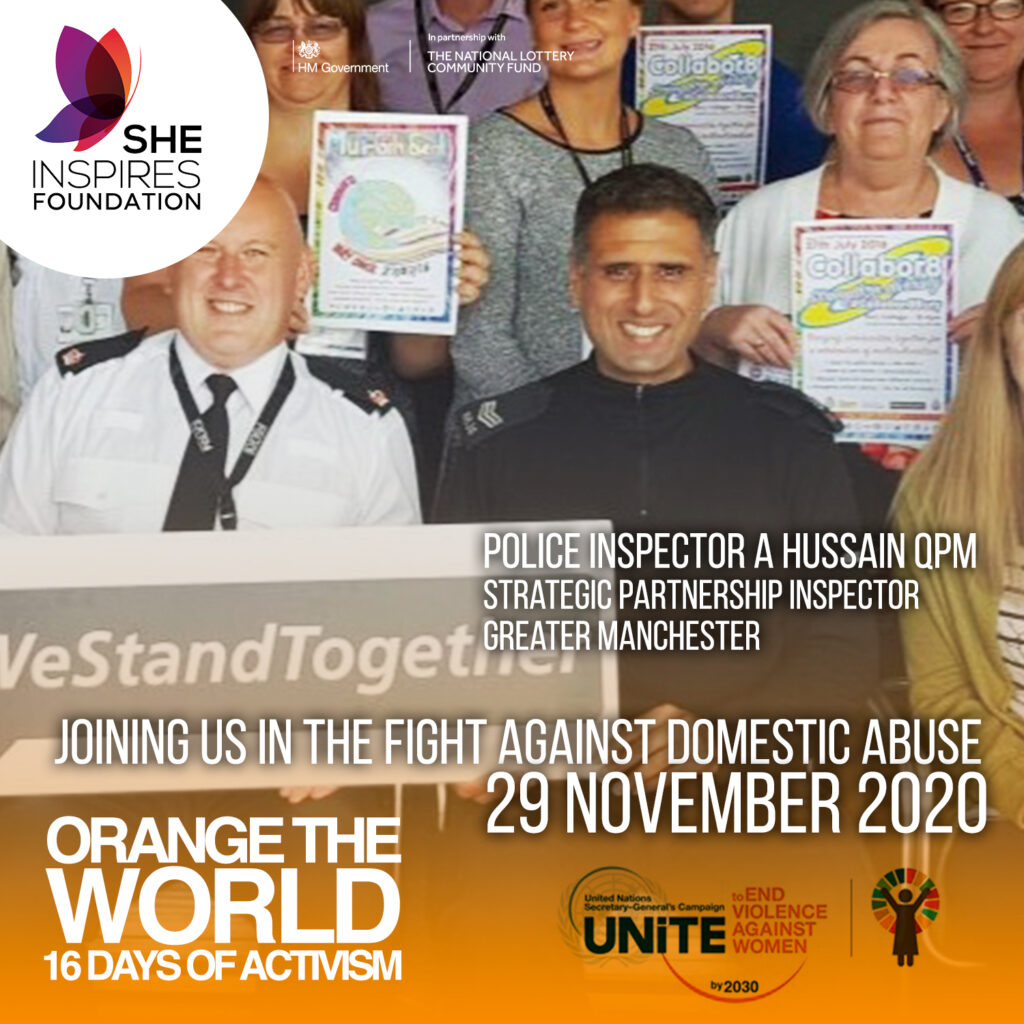
Joining us in the fight - GMP Strategic Partnership Inspector Abed Hussain QPM
Joining us in the fight against Domestic Abuse during 16 Days of Activism was GMP Strategic Partnership Inspector Abed Hussain.
Strategic Partnership Inspector on the Bolton District of Greater Manchester Police building relationships and stronger communities.
#westandtogether
about the 16 days
The Global 16 Days Campaign, launched by the Center for Women’s Global Leadership (CWGL) at its first Women’s Global Leadership Institute in 1991, has been used worldwide to call for the elimination of gender-based violence (GBV). It is run annually from November 25 (International Day Against Violence Against Women) to December 10 (International Human Rights Day). In 2018, a multi-year theme focusing on ending GBV and harassment in the world of work was announced by CWGL to coincide with the adoption of a historic new ILO Convention with the same focus.
Violence against women and girls (VAWG) is one of the most widespread, persistent and devastating human rights violations in our world today remains largely unreported due to the impunity, silence, stigma and shame surrounding it.
In general terms, it manifests itself in physical, sexual and psychological forms, encompassing:
- intimate partner violence (battering, psychological abuse, marital rape, femicide);
- sexual violence and harassment (rape, forced sexual acts, unwanted sexual advances, child sexual abuse, forced marriage, street harassment, stalking, cyber- harassment);
- human trafficking (slavery, sexual exploitation);
- female genital mutilation; and
- child marriage.
To further clarify, the Declaration on the Elimination of Violence Against Women issued by the UN General Assembly in 1993, defines violence against women as “any act of gender-based violence that results in, or is likely to result in, physical, sexual or psychological harm or suffering to women, including threats of such acts, coercion or arbitrary deprivation of liberty, whether occurring in public or in private life.”
The adverse psychological, sexual and reproductive health consequences of VAWG affect women at all stages of their life. For example, early-set educational disadvantages not only represent the primary obstacle to universal schooling and the right to education for girls; down the line they are also to blame for restricting access to higher education and even translate into limited opportunities for women in the labour market.
While gender-based violence can happen to anyone, anywhere, some women and girls are particularly vulnerable – for instance, young girls and older women, women who identify as lesbian, bisexual, transgender or intersex, migrants and refugees, indigenous women and ethnic minorities, or women and girls living with HIV and disabilities, and those living through humanitarian crises.
Violence against women continues to be an obstacle to achieving equality, development, peace as well as to the fulfillment of women and girls’ human rights. All in all, the promise of the Sustainable Development Goals (SDGs) – to leave no one behind – cannot be fulfilled without putting an end to violence against women and girls.